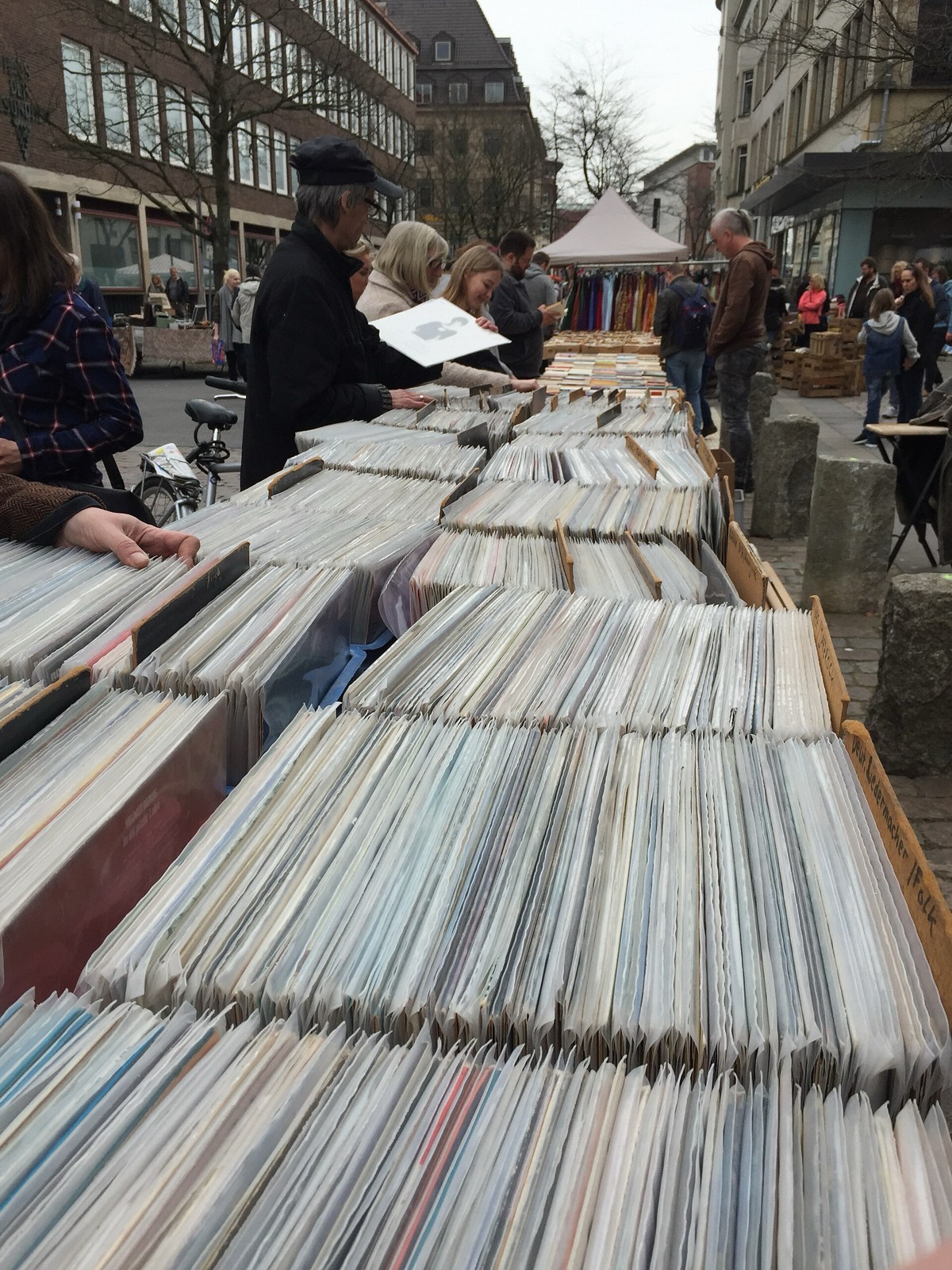
Vinyl has a reputation as an expensive hobby. That's only true if you collect the way the market wants you to: preordered represses, hyped "limited editions" and top-condition originals. Collect the way the second-hand market actually works and you can build a hundred-album collection for the price of ten new ones. Here's the strategy.
Start with a direction, not with records
The cheapest decision you can make is deciding what you collect. A direction — a genre, an era, a couple of core artists — makes every buying decision easier and every mistake rarer. "Everything that's good" is not a strategy; it's how you end up with thirty records you never play. The direction can be narrow at the start: you can always widen it, but the money spent on scattered impulse buys doesn't come back.
The condition strategy: VG+ is the budget collector's friend
Second-hand price logic is steep: a record in Near Mint can cost twice as much as the same record in Very Good Plus, even though the difference on the platter is often small. That gap is the budget collector's room to work. The rules of thumb:
- VG+ for records you'll play. Close to the NM experience, far below the NM price.
- VG when the price is right — good listening copies with audible but not intrusive noise. Read the grading guide so you know what the grades promise.
- Save NM for the heart records — the five to ten albums you care most about deserve the best copy you can afford.
- Below VG: only if the record is genuinely hard to find at all.
Where the finds are
In rising price order, falling effort:
- Flea markets and estate sales. Lowest prices, most random selection, biggest chance of real finds — records sold unidentified.
- Record fairs and second-hand shops. Slightly pricier, much better sorted.
- Auction sites. Good prices on common titles; watch the closing minutes and always count shipping.
- Record shop bargain bins. The cheap crates are curated finds — and the shop has advantages the internet lacks: you see the condition yourself.
- Discogs. Best for targeted buys when you know exactly what you want; shipping makes small purchases expensive, so bundle several records per seller.
A workflow that works: scan or look up everything interesting you find — a quick check in Rekord shows second-hand prices and the rarity signal while you're standing at the crate. It takes ten seconds and separates the three-euro find from the three-euro filler.
The traps that drain the budget
- The hype tax. Coloured "limited editions" of new albums often cost 50% more than the standard pressing and are rarely genuinely limited. The music sounds the same.
- The shipping trap. A cheap record with expensive shipping is an expensive record. Always count the total.
- "Rare" without evidence. The word in a listing means nothing — check actual price history and demand before paying a premium. More on the signals in the price guide.
- Quantity addiction. A hundred records you never play isn't a collection, it's storage of other people's records. Play what you buy; sell what you don't.
- Don't skip the care. Without inner sleeves and cleaning, your finds lose both sound and value — the care guide is mandatory reading for budget collectors, because care is free value preservation.
A sensible starting budget
Split the money roughly like this at the start: half on records, a quarter on care and protection (cleaning kit, inner and outer sleeves — they protect the investment), the rest saved for the unexpected find. That last item matters most: the best buys are unplanned, and it stings to stand at the crate with an empty wallet.
Patience is the superpower
Almost every record surfaces again. Prices move, collections get sold, estates get cleared. Those who can wait pay less: put a price watch on pricier titles (Rekord's watch emails you when the price drops below your threshold), and let the hunt take the time it takes — the hunt is half the hobby.
The getting-started list
- Pick a direction: genre, era or artists.
- Learn the grades — VG+ is the default, NM for the heart records.
- Flea markets and crates first, Discogs for targeted buys.
- Scan before you buy; count total price with shipping.
- Sleeves and cleaning from day one.
- Play everything you buy. Sell what you don't play.
A collection built this way grows slower than one built with a credit card on represses — but it's cheaper, more personal, and more fun to have built. Which is the whole point.