A vinyl record that's looked after plays just as well in fifty years. One that isn't collects scratches, noise and mould — and loses both listening value and resale value. The good news: proper care is neither expensive nor complicated. It comes down to three habits: keep the records clean, give them the right sleeves, and store them properly.
Cleaning: dry and wet
Cleaning happens on two levels, and you need both.
Dry brushing — every play
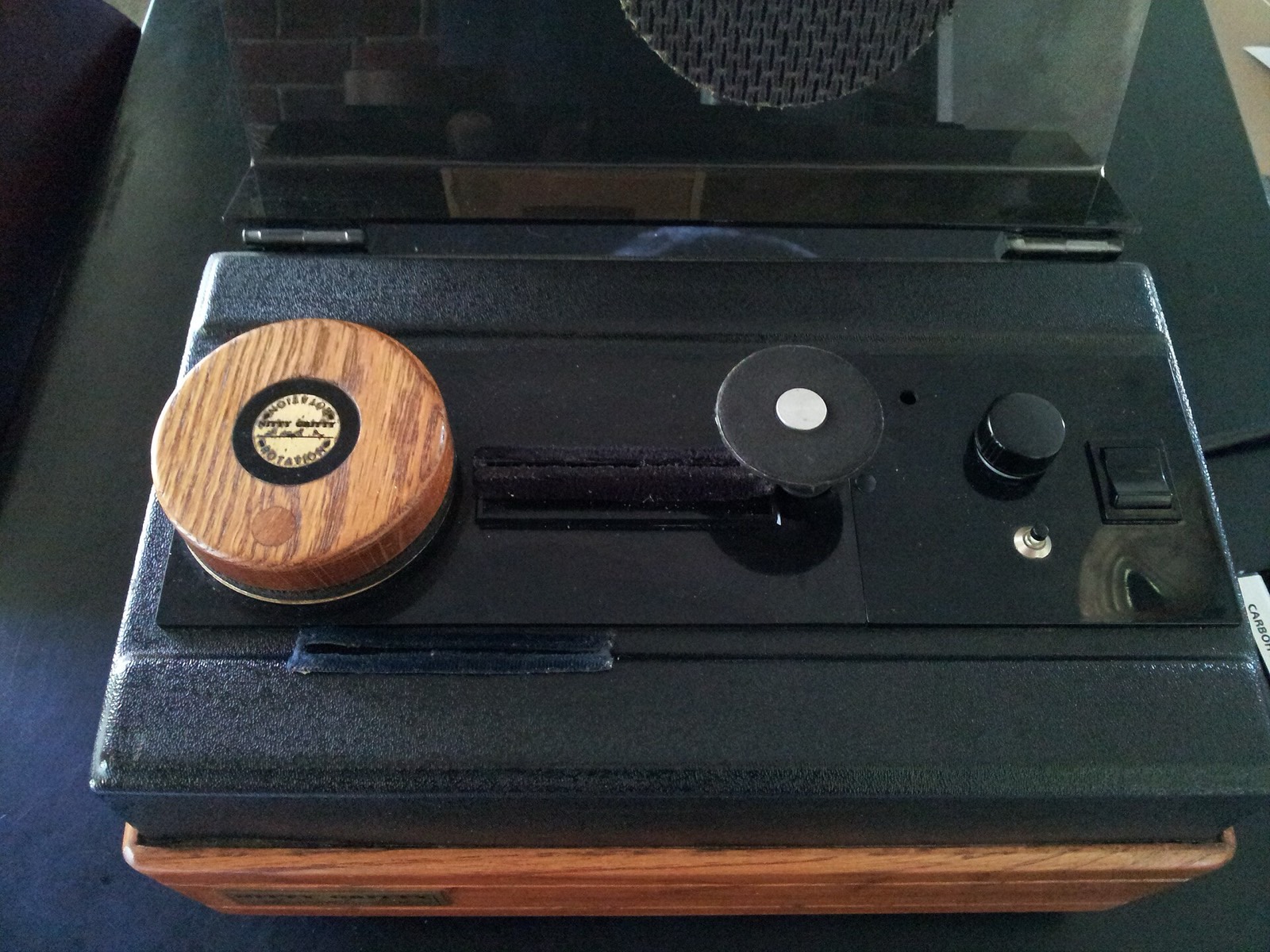
Dust is vinyl's everyday enemy: it crackles, collects on the stylus and gets ground into the grooves as the record plays. The routine takes ten seconds: sweep a carbon fibre brush in a soft arc along the grooves while the record rotates, angle off and lift. Do it before every play, ideally after as well. The brush removes surface dust — not grease, fingerprints or old grime.
Wet cleaning — when needed
Second-hand buys, flea market finds and records that crackle despite brushing need a deep clean: fluid that dissolves the dirt in the grooves and a method that lifts it away. The ambition levels:
- Manual: cleaning fluid made for vinyl + microfibre cloth, work along the grooves, let it dry completely before playing. Cheap and clearly better than nothing.
- Cleaning machine with vacuum or spin: fluid is brushed in, the machine sucks or spins it off along with the dirt. The standard level for collectors — a proper wash can lift a greying VG+ copy substantially in listening quality.
- Ultrasonic: the most expensive and most thorough.
Rule of thumb: every incoming used record gets a wet clean before it meets your stylus for the first time. You're protecting both the record and the needle.
What not to do
No methylated spirits, no dish soap, no household sprays — they can damage vinyl or leave films that sound worse than the dirt. Tap water leaves mineral residue; use distilled if you mix your own. And keep the label dry, whatever the method.
The stylus — half the equation
A dirty or worn stylus scratches clean records. Clean it regularly (gel pads are the gentlest for beginners), and replace it within the manufacturer's stated lifespan. If you play a lot, a tracking force gauge is cheap insurance — wrong tracking weight wears grooves prematurely.
Inner sleeves: replace the paper
Records that arrive in plain paper sleeves are living inside their own wear mechanism: paper micro-scratches the surface with every in and out, and sheds paper dust into the grooves. Swapping them is vinyl care's best value-for-money upgrade: antistatic sleeves (polyethylene-lined) cost pennies each and eliminate both the scratch risk and the static charge that attracts dust. Keep the original sleeve if it's printed — it belongs to the edition and affects collector value — but let the record live in the new one.
Outer sleeves: protect the jacket
The jacket is often a bigger share of the value than people think — and it wears faster than the disc. A plastic outer sleeve stops ring wear, edge knocks and shelf wear for next to nothing. When you buy a nice record, the sleeve is the cheapest way to freeze its condition where it is.
Storage: upright, cool, dry
- Always upright. Horizontal stacks create pressure that warps discs and prints rings into jackets. Snug enough to stand straight, loose enough to pull one record without dragging its neighbour.
- No leaning. Records that lean for long periods can deform. Fill out half-empty shelf sections with supports.
- Avoid heat and sun. Direct sunlight fades jackets and can warp vinyl; radiators and car boots are classic culprits. Aim for normal room temperature, steady over time.
- Avoid damp. Humid basements grow mould on jackets and sleeves. Mould smells, spreads and kills value.
- The floor is the wrong place. For the damp and for the cleaning accidents.
Handling
Hold records by the edge and the label — never fingers on the playing surface. Skin oils attract dust and etch in over time. Back in the sleeve straight after playing; a record left on the turntable overnight has collected a day's dust for its next spin.
The routine in short
- Brush before every play.
- Wet clean every incoming used record, and anything that crackles.
- Antistatic inner sleeves + plastic outer sleeve on everything you care about.
- Store upright, cool, dry, dark.
- Keep the stylus clean and replace it on time.
Five habits, none expensive, that together decide whether a collection ages like wine or like milk. The records you look after today are the ones still playing — and still holding their value — when you flip to them in twenty years.