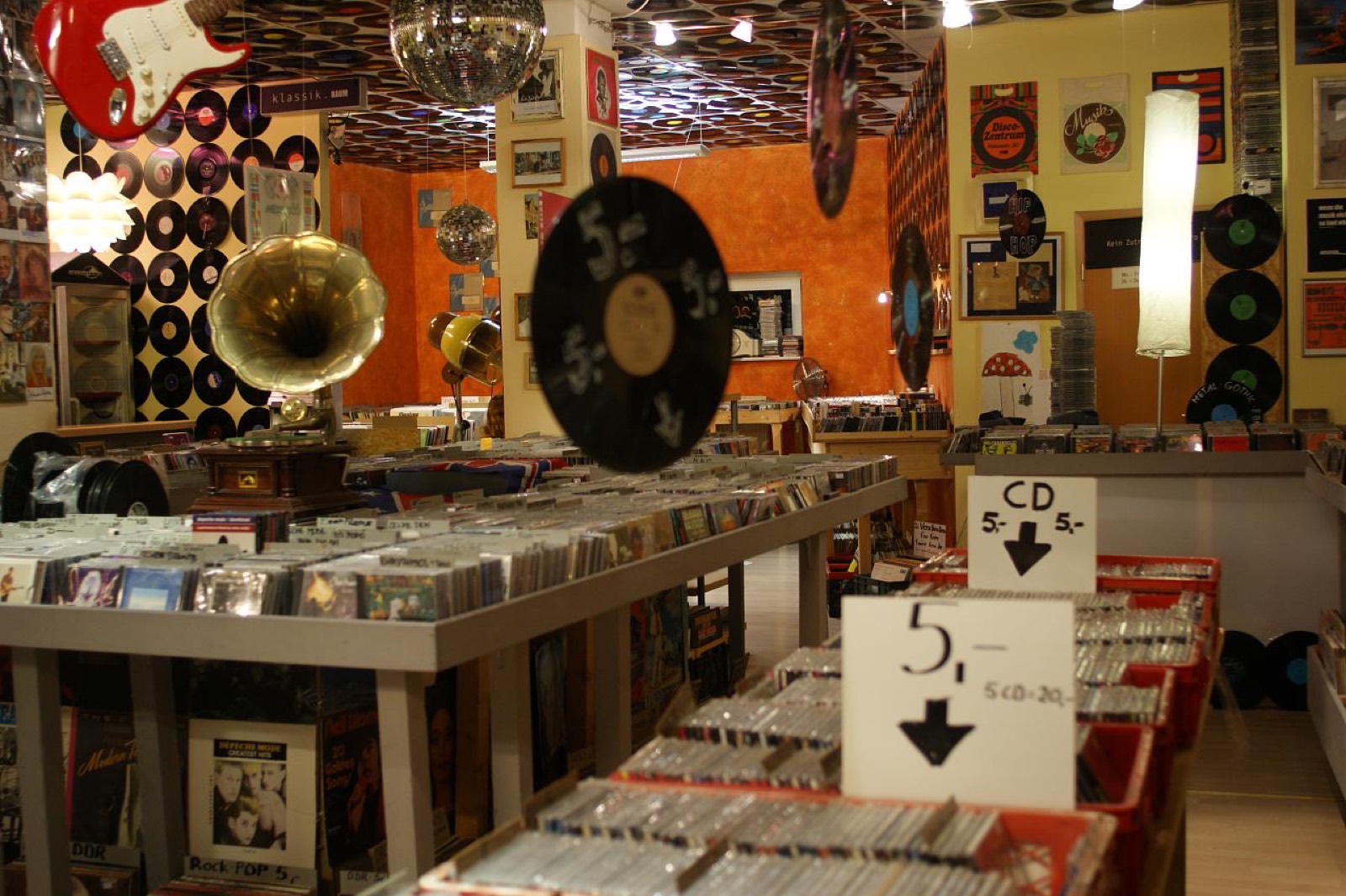
Two ways to buy the same used record: the world's biggest marketplace in your phone, or the crates of a physical shop. Both work. But they fail in different ways, and knowing where the traps sit lets you use each channel for what it does best.
What Discogs does best
Discogs' strength is selection and precision. Practically every edition of every album is listed, and you buy an exact pressing — not "a copy of the album" but the specific edition you chose, with the seller's grading of disc and sleeve on the Goldmine scale. The price history shows what copies have actually sold for. For narrow titles, specific pressings and systematic collecting it's unbeatable.
What the shop does best
The shop's strength is your hand and your eye. You can pull the disc from its sleeve, tilt it in the light, see the scratches yourself and sometimes listen before buying — no grading dispute afterwards, no shipping, no waiting. Prices can also be untouched by online price history: bargains survive in crates in a way that algorithm-priced marketplaces rarely allow. And the staff is a search engine that knows your taste after three visits.
The pitfalls on Discogs
- Shipping eats the bargain. A €9 record with €18 shipping from abroad is no deal. Rule of thumb: bundle several purchases from the same seller, or accept that single purchases below a certain level rarely make sense internationally.
- A grade is a claim. Most sellers grade visually and honestly — but optimism happens. Read the seller's feedback, especially comments about grading. On expensive buys: ask for photos and whether the record has been play-graded.
- Customs and VAT across borders. Purchases from outside your customs area — the UK post-Brexit, the US, Japan — can arrive with VAT, duty and a handling fee added on delivery, often a substantial surcharge. Count it in before comparing with domestic prices.
- Shipping damage. Records sent without stiff packaging arrive with knocked corners. High-volume sellers know this; new sellers sometimes don't. On expensive purchases, asking about packaging is entirely reasonable.
- Currency. Prices are listed in the seller's currency — card fees and exchange margins are added silently.
The pitfalls in the shop
- The selection is luck. The shop has what came in. If you're hunting a specific pressing you can search for years — that's a job for Discogs.
- Pricing varies. Some shops price against Discogs history, others by feel. That creates both bargains and overpricing — have a reference in your pocket before paying collector money.
- No price history on site. In the shop, your own eye does the grading. Check the disc in good light (ask to take it out of the sleeve — serious shops say yes), and run the condition percentages yourself.
- Impulse buys. The magic of the crates is also their business model. Thirty cheap records you never play cost more than five you love.
The right channel for the right purchase
A simple split that holds up surprisingly well:
| Purchase | Best channel |
|---|---|
| Specific pressing of a specific title | Discogs |
| Expensive record where condition is everything | Shop (or Discogs with photos + questions) |
| Exploring a genre cheaply | The shop's crates |
| Narrow titles that never surface locally | Discogs |
| Bargain hunting without a deadline | Both — watch the price and keep your eyes open |
Good habits either way
- Identify the exact pressing before comparing prices — the guide on runout codes shows how.
- Carry a price reference: check actual sales, not asking prices. A quick scan in Rekord at the crate shows live prices from several sources while you're still holding the record.
- Count the total price: record + shipping + possible customs — not just the sticker.
- Wet clean every used purchase before its first play, wherever it came from (the vinyl care guide).
The conclusion
Discogs is a library with a till; the shop is a hunt with your hands. The library wins on precision and selection, the hunt on condition control and surprises. Collectors who use both — the shop for finds and condition-critical buys, Discogs for precision hunting — get the best of two worlds and avoid the worst of each.